0billion+
Made every year.
Coffee pods are manufactured at a rate of roughly 39,000 a minute, almost all of them a plastic cup bonded to an aluminium lid.
Industry estimateA coffee capsule is a laminate: a plastic cup, a barrier layer and an aluminium lid, bonded so tightly they cannot be pulled apart again. That bond is what keeps coffee fresh, and it is also what makes the pod impossible to recycle in a normal household bin.
Coffee pods are manufactured at a rate of roughly 39,000 a minute, almost all of them a plastic cup bonded to an aluminium lid.
Industry estimateMicroplastic measured in hot retail coffee. Every one of 155 samples tested contained some, and polypropylene, the plastic most capsules are made from, was the most common polymer found.
Al-Mansoori, Harrad and Abdallah, 2025And a pod sold as compostable is not the escape route: it needs an industrial facility, yet 9 in 10 US households have no food waste collection at all.
Industry estimate · BioCycle nationwide survey, 2023| Naturista | Plastic and aluminium pod | Pod sold as compostable | |
|---|---|---|---|
| Time to break down | Days | Centuries | Weeks, industrial facility only |
| Microplastics in the cup | None, no plastic present | Measured in hot coffee | Depends on the plastic used |
| Works in existing machines | Yes | Yes | Varies by brand |
| Home compostable | Yes | No | No |
| Dissolves in water | Yes, completely | No | No |
Most people will not change their morning routine to save the planet. We do not think they should have to. The failure is not that people are careless, it is that the only convenient option was built out of a material that outlives everyone who uses it.
So we did not design a product that asks anyone to give something up. Same machine, same taste, same thirty seconds. The only difference is what is left over, and there is nothing left over.
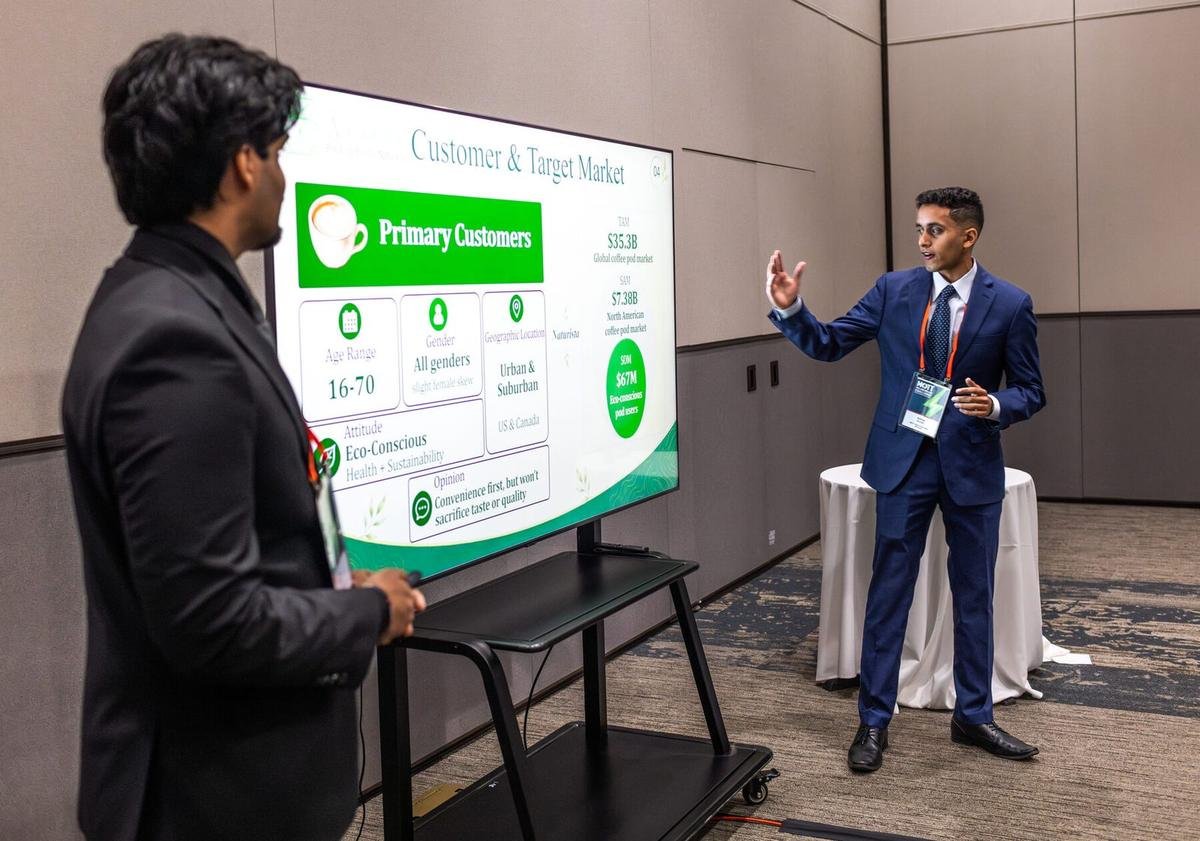

Move from a formulation that works on a counter to one a factory can run consistently, at a cost that competes with the plastic shell it replaces.
The companies already making billions of pods a year can switch material faster than any new brand can outsell them. Licensing puts the pod in more hands, sooner, than competing would.
Every pod replaced is one laminate shell that never reaches landfill, and one cup of coffee brewed through something that was never plastic to begin with.
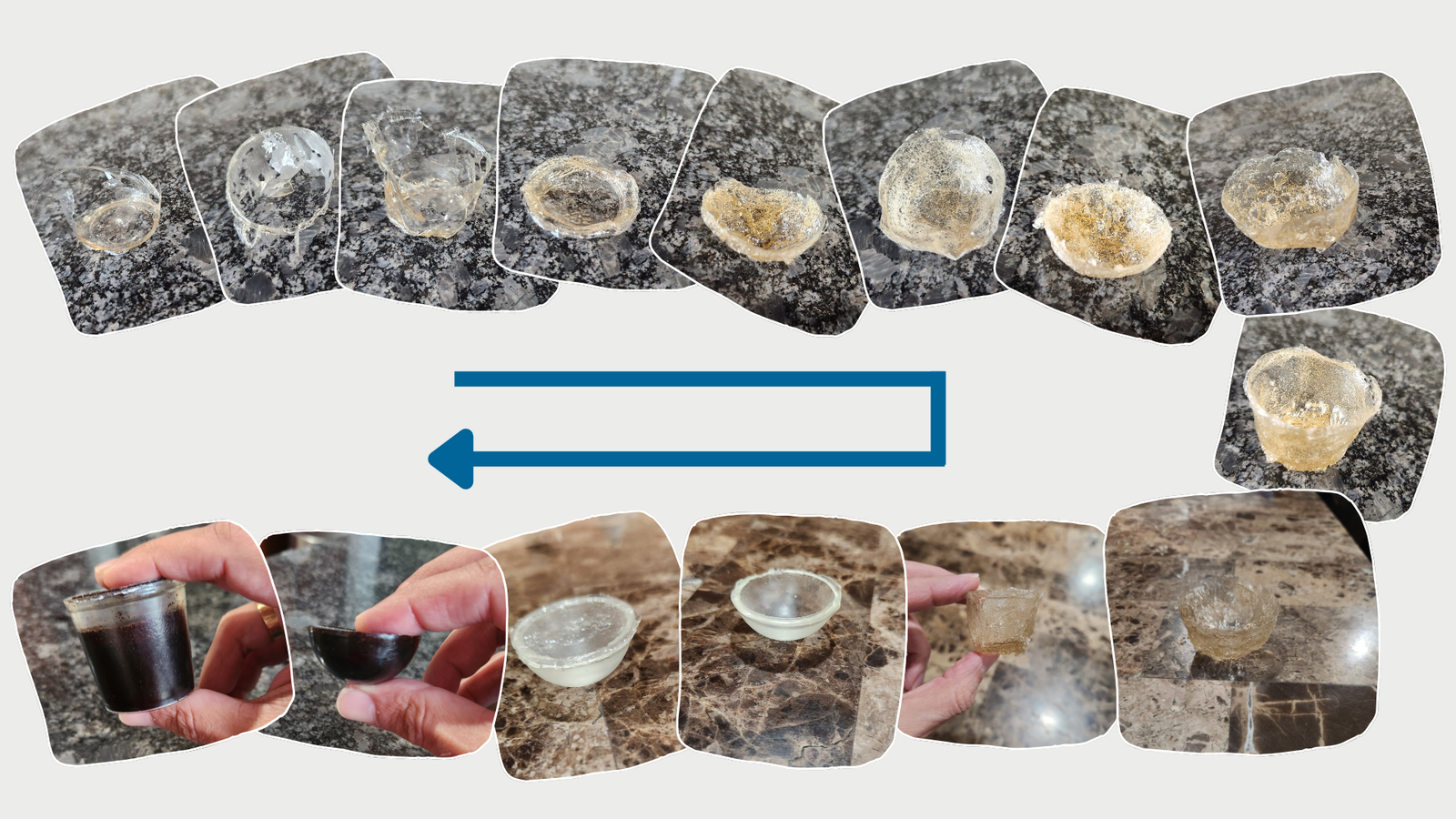
We were two students with no laboratory, ordering biopolymers online and casting films on a kitchen counter. Two hundred failures later, one of them held. That is the whole argument: the problem was never that this was impossible, it was that nobody had bothered.
Naturista did not start with coffee. It started with a class of materials used inside the human body. Bioabsorbable implants — dissolving screws, pins, meshes and stents — are designed to hold a structure together while tissue heals, then break down into byproducts the body safely absorbs, so no second surgery is needed to take them out.
That is the same problem a coffee pod has, stated differently. The shell has to be rigid and sealed for exactly as long as it is useful, and then it should stop existing. Plastic capsules solve the first half and ignore the second. Surgery solved both decades ago by choosing a material whose disappearance is a designed property rather than an afterthought.
A bioabsorbable implant is engineered to hold load for a known period, from months to two years, then hand that load back to healed tissue. A pod needs the same thing compressed into thirty seconds of hot water and pressure.
The point of a dissolving implant is that nobody has to go back in and retrieve it. The point of a dissolving pod is that nobody has to sort, peel, rinse or drive it to an industrial composter.
Medicine reaches for polymers that metabolise cleanly. We reached for pullulan, a food grade polysaccharide already used in pill capsules, and asked it to do the structural job instead.
Surgeons stopped asking how to make an implant last forever and started asking how to make it leave on schedule. A coffee pod is a far easier version of that question, and for decades nobody asked it.
Background on bioabsorbable implants: Lifetime Surgical, Bioabsorbable Materials: The Future of Surgical Implants. More on how that thinking chose pullulan is on the research page.
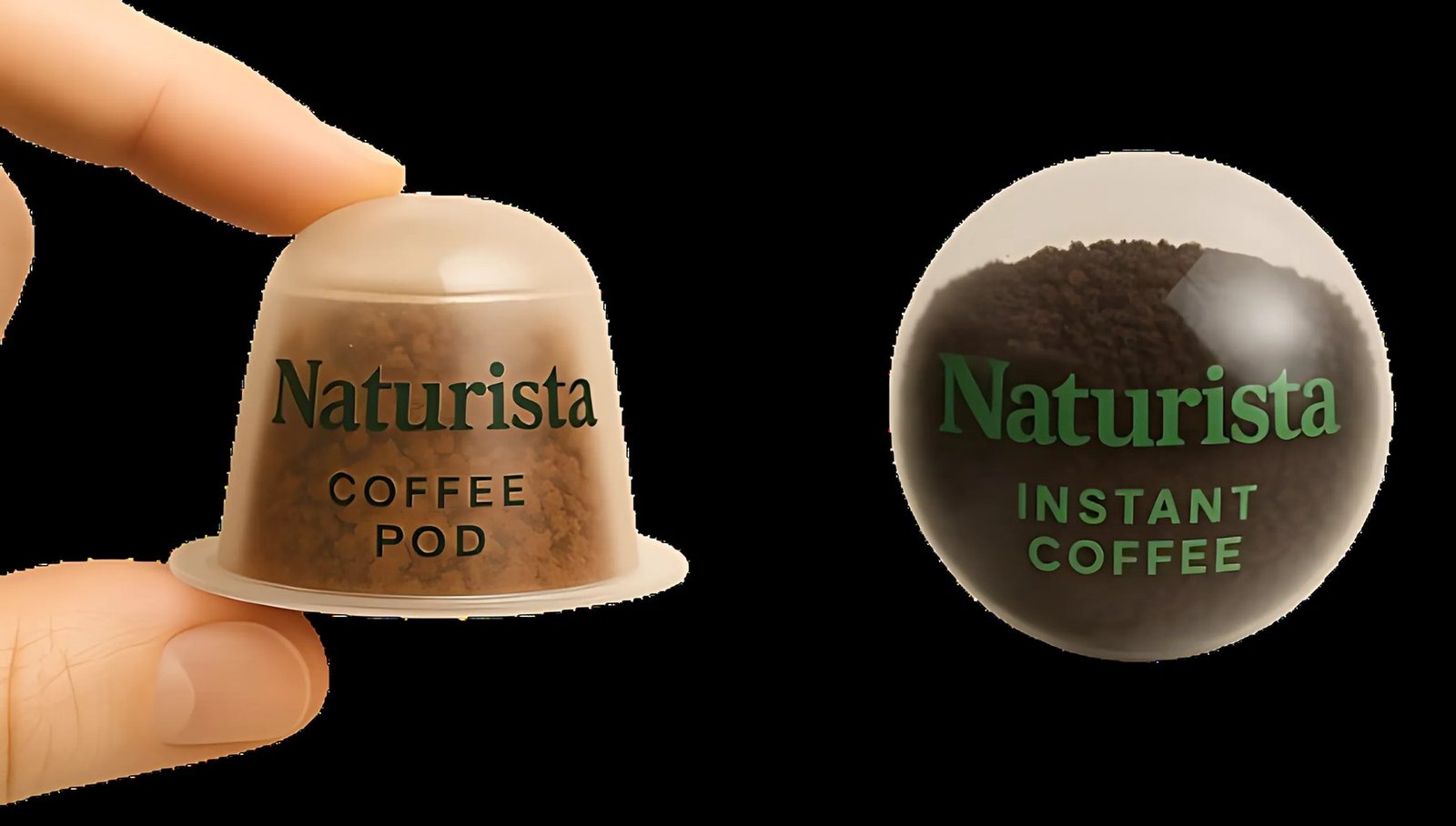
Both are made from pullulan. One is shaped to work in the coffee machine you already own. The other skips the machine entirely.
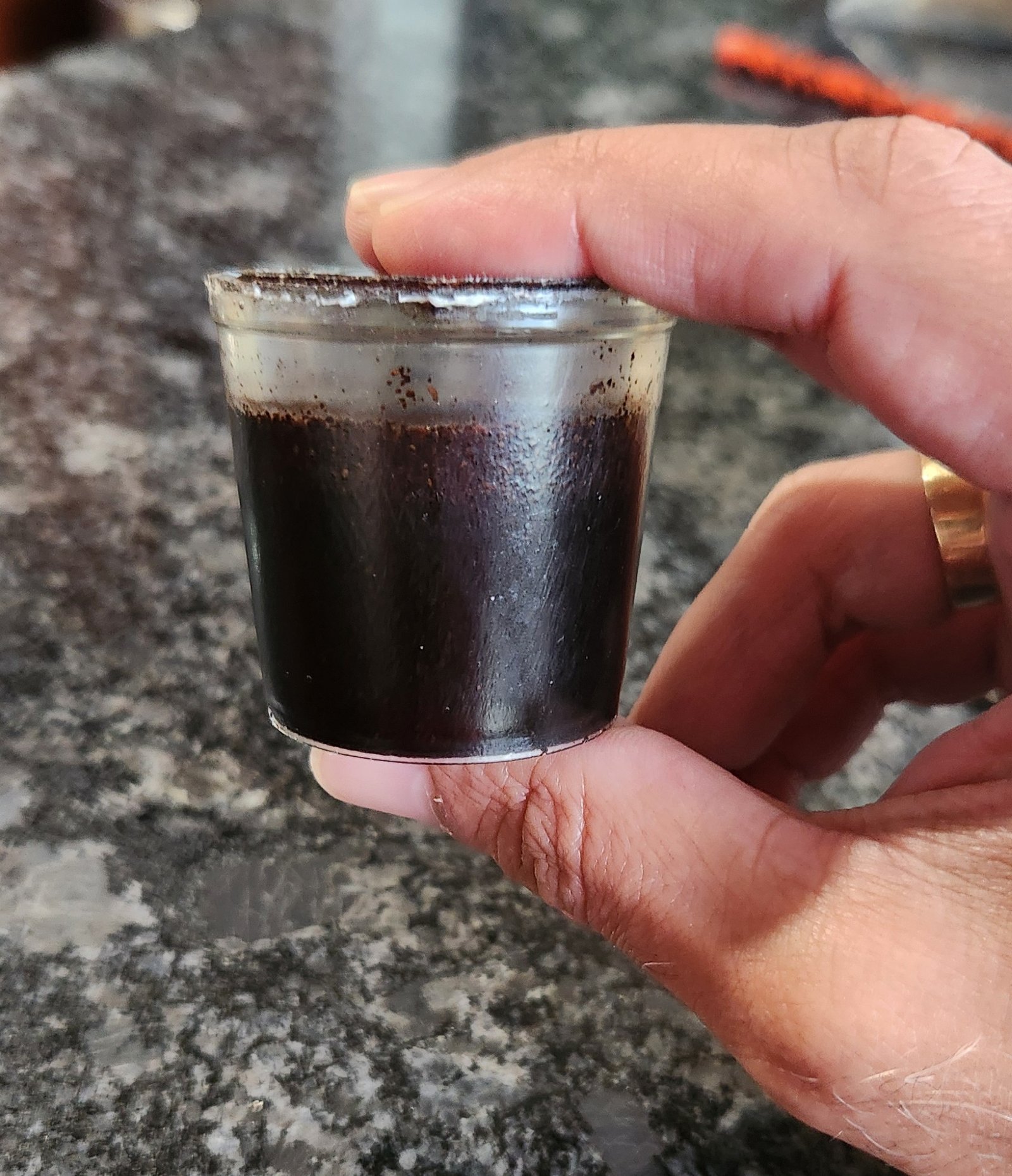
It is the same size and shape as a standard capsule, so it drops into your existing brewer with no adapter and no change to how you make coffee. The shell is built to hold its shape against hot water and pressure for the length of a brew. After that it is just plant material: put it in the garden or the compost bin and it breaks down in days.
Into any standard single serve machine.
The shell stays intact through the full cycle. The coffee tastes the same.
No sorting, no peeling off a foil lid, no special facility.
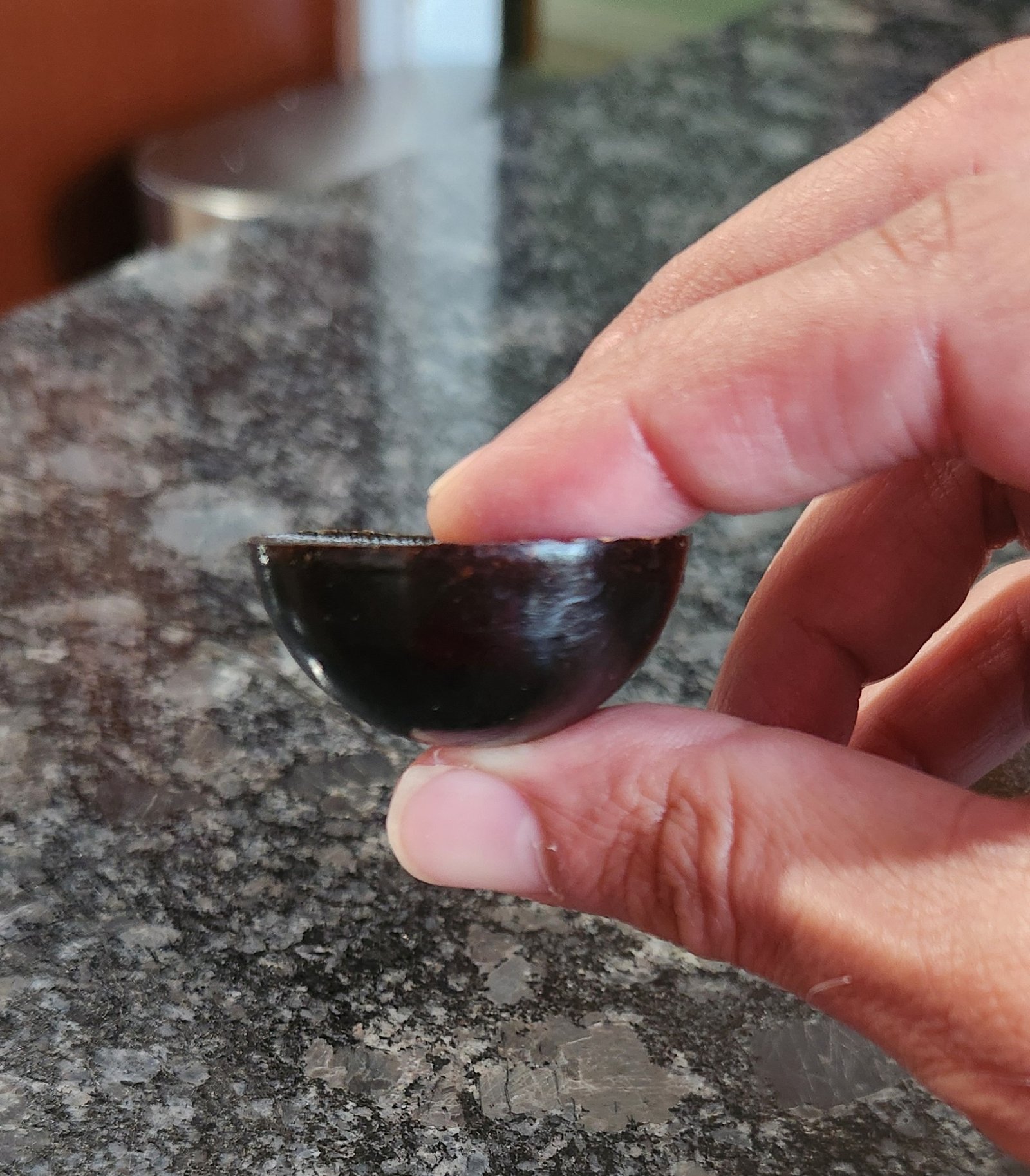
A measured dose of coffee sealed inside a thin pullulan shell. Drop it into hot water and the shell dissolves in seconds, releasing the coffee as it goes. There is no capsule to pull out, no filter, and no machine needed. The packaging becomes part of the drink.
One pod into a mug of hot water.
The shell dissolves in seconds and the coffee disperses with it.
Nothing to bin, nothing to rinse, nothing to recycle.
Coffee capsules are made of plastic and aluminium bonded together. They cannot be recycled at home, they shed microplastics into hot coffee, and they sit in landfill for centuries. We replaced the whole shell with one natural material that dissolves in water and breaks down in days.
Independently published, none of it written by us.
Newswire, two television stations, financial media and international newspapers.
All coverageNaturista has been judged, written about and published. Everything below links out to the original sources.
$35,350 raised through competition prizes and grants, including the grand prize at the Mott Million Dollar Challenge and third in the world at the SAGE World Cup.
See the awards → PressNewswire releases, two television stations, financial media and international newspapers. Every article linked in full.
Read the coverage → ResearchNine candidate materials tested against six criteria, published in a peer reviewed journal with a registered DOI.
Read the research → Impact576,000 tonnes of capsule waste a year, nine in ten households with nowhere to compost it, and what changes when the shell is one water soluble material.
See the impact → FAQIs it safe to drink, does it work in your machine, what will it cost and when can you buy one. Seventeen straight answers.
Read the FAQ → ShopClassic and dark roast instant pods in boxes of 24 and 48, plus the machine pod. The instant pods are available now; the machine brew pod will be available soon as production comes online.
Open the shop →Leave an email for production updates, licensing enquiries or research questions.